Pages

Showing posts with label Summer learning journey.. Show all posts

Thursday, 18 January 2018

Week 3 Day 5 Maintaining the Status Quo (The 1990’s)

Day 5: Maintaining the Status Quo (The 1990’s)
Activity 1: Hiking Tongariro
In 1990, one of the largest national parks in New Zealand, Tongariro,
was listed as a World Heritage Site. It is a truly spectacular place to visit!
Thousands of people go to Tongariro every year and hike the
Tongariro Crossing. Visit the Tongariro website to learn more about the
one-day hike.


On your blog tell us what you would need to pack if you were going to
hike the Tongariro Crossing. What should you bring with you? Write a list
of at least 5 items.


Other than making sure that you have the right equipment, what else
should you do before heading out on a big hike? Click here to learn how
to stay safe while you’re hiking.

  1. Food and Water.
  2. Warm clothes.
  3. Rope
  4. Good shoes that have grip
  5. Something that can hold you
  6. Harness

Those were my things that you should bring.

Activity 2: Leading New Zealand

In the 1990s, four different individuals served as the Prime Minister of New Zealand
Geoffrey Palmer, Mike Moore, Jim Bolger and Jenny Shipley.

On your blog, write a short profile of one of our former Prime Ministers. Upload a photo
of them with your post. Click on this link to find a copy of the template. Click on file and
then click make a copy. This will save the blank template to your Google Drive so that
you can fill it in. Post the completed template to your blog to earn points for this activity.

Leading New Zealand
Week 3, Day 5 (Bonus Activity)



Name of Prime Minister: Helen Clark
Date of Birth: 26 February 1950


Political Party: New Zealand Labour party
Number of Years as Prime Minister: 9 years
Three interesting facts about my chosen Prime Minister:
  1. She was the 37th prime minister in New Zealand
  2. She is the 5th longest serving prime minister
  3. She was the second woman to hold her position as prime minister.

Bonus Activity: You Have to Pay to Play
In 1990, for the first time in New Zealand’s history, universities and
polytechnics started charging students money to go to school. Prior to
then, it had been free to go to university or to a polytechnic. Since 1990,
students have had to pay thousands of dollars to attend post-secondary
(after high school) education.

The new Labour government have promised to give up to three years of
post-secondary education to all New Zealanders by 2020!

On your blog, tell us what you think. Should students have to pay
money (tuition fees) to go to university? Why or why not?

I think students should not have to pay to go to university because 1
they’ve just gotten out of school and 2 the university should be paying
for it because the kids have no money and have to pay for anything else
that the university says to pay for.

That was my answer.

 I hope you enjoy Week 3 Day 5.

Friday, 29 December 2017

Summer learning journey

Here is a Image of St. Patrick's Cathedral on the outside.

Week two A period of change ( 1871 - 1950) ( Day 1 ) Summer learning journey

Week Two: A period of change ( 1871 - 1950)
Day 1: The Early Years (Late 1800s – 1919)

Activity 1: St Joseph’s Cathedral


At the turn of the century, there was a great deal of
construction happening in New Zealand. Many of the new
British settlers wanted to build homes and community
meeting places, such as churches. One of the largest
buildings to be constructed during this period was
St Joseph’s Cathedral in Dunedin.


St Joseph’s Cathedral is just one of hundreds of beautiful
cathedrals around the world.


Use your search engine to find a picture of another
famous cathedral. Post a picture of the cathedral on your
blog. Underneath the picture tell us: the name of the
cathedral, where the cathedral is located, when it was
built, and how long it took to build.

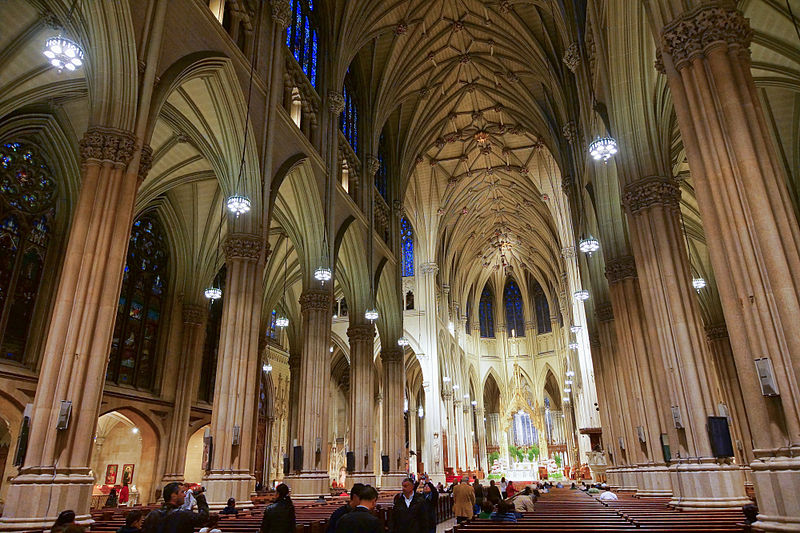
File:NYC - St. Patrick's Cathedral - Interior.JPG

The name of this Cathedral
is called St. Patrick’s Cathedral.
It is located in New York city, USA.
The Cathedral was created in
1808. It took 150 years to build this Cathedral.


Activity 2: The right to vote

At the turn of the century, New Zealand elected its first
ever government. Richard John Seddon served as the
leader of the Liberal Party from 1893-1906. Prior to 1893,
only men were legally allowed to vote. This all changed in
the late 1800s when a woman named Kate Sheppard lead
a suffragist movement in New Zealand calling for a change
in law. Her hard work finally paid off when the Electoral
Act was passed into law on 19 September 1893, giving
women the right to vote. New Zealand was the first country
to give all women the right to vote. There were still
countries in the world (e.g. Saudi Arabia) who, until
recently, did not allow women to vote.

On your blog tell us what you think about the fact that
women were not allowed to vote in Saudi Arabia until
2015. Is it fair? Why or why not?

I think that in Saudi Arabia people were wrong
about not letting women vote until 2015.
The women their should have started voting
when men started voting. It is not
fair on the women to have started
voting in 2015.  

Bonus activity: In Flanders fields

As the new century dawned, New Zealanders settled into
a period of relative calm. The calm lasted for about 15
years but came to a sudden end in 1914 when World War
I erupted in Europe. The war lasted for almost five years
and claimed the lives of 18,000 New Zealanders.

It also claimed the lives of thousands of men and women
from countries around the world. Every year,
we remember these brave men and women on ANZAC
Day (25 April). Many people go to a special Anzac Day
ceremony where they read a special poem that was written
for the fallen soldiers. The poem is called ‘In Flanders
Fields’ by John McCrae.

Read the poem. On your blog, tell us what you think of
the poem. Do you like it? How does it make you feel?

It makes rachel feel very lucky to live in a beautiful, safe
country like New Zealand. It also makes me feel sad for
those who died in the war and for their families. I think
that we are very lucky that they went to war and fought
for our freedom.

This poem makes me feel proud
of the people who went to war.
It makes me sad because the
people who died saved our freedom
and risked their lives just for us.
My great great grandfather fought
In world war 2. My grandpa also fought
In the war.


Thanks for reading my blogpost.

Friday, 22 December 2017

SLJ ( Day 5 )

Summer learning journey
Day 5: The dawn
of a new Era.
From the 1840s onwards, many European
settlers came to live in New Zealand. It was a
difficult period in New Zealand’s history. As the settlers
began to outnumber the Māori, a great war erupted
between the two groups as they fought for access to land
to build homes and establish communities.


Activity 1: Translating Phrases.


Unlike the Māori, many of the European settlers didn’t
speak Te Reo Māori. Instead, they spoke English. As you
can imagine, it was very difficult for the two groups to
communicate because they did not have a dictionary or a
translator. These days we are able to use the Internet to
translate words and phrases from one language to another.
Use Google Translate to translate the following five
phrases from English to Te Reo Māori or from Te Reo
Māori to English. Post the translations on your blog.
Be sure to include the phrase in both the English and
Māori to earn full points.
Phrases:
Here are the phrases
I translated.


Te reo Maori :Nau mai ki Aotearoa.
English: Welcome to New Zealand.

English:Levonah is my name.
Te reo Maori :Ko Levonah Toku Ingoa.

English:What is your name.
Te reo Maori: He aha to ingoa.

Te reo Maori :He pai taku ki te takaro i te whutupaoro.
English: I like to play rugby.

English:Where do you come from?
Te reo Maori: No hea koe?

Activity 2: The treaty of Waitangi.

On 6 February 1840, a very special document was signed
by the Māori chiefs and the British settlers in
New Zealand. It was called the Treaty of Waitangi
(Te Tiriti o Waitangi) and it outlined how the two groups
would live together and work together in New Zealand.
It was the first document of its kind to be signed in the
entire world. The Treaty was signed in a place called
Waitangi in northern New Zealand.


Follow this Waitangi village link to read about the village
of Waitangi.

On your blog, tell us three fun things that you can do as a
visitor in Waitangi. Which one would you like to do the
most?

#1 Taiamai Tours Heritage Journeys.

#2 Waitangi Treaty Grounds Hāngi and Concert.

#3 Waitangi Mountain Bike Park.

If I went to Waitangi the activity
I would want to do the most
would probably be
Taiamai Tours Heritage Journeys.

Bonus Activity: #EarnTheFern

After the Treaty of Waitangi was signed, New Zealand
became a British colony. Many other countries in the world
are also British colonies including Canada, South Africa,
Australia, India and Malaysia. As a group they were, and
still are, called the ‘Commonwealth’ countries. Years ago,
a man named Melville Marks Robinson was asked to
organize a sporting competition for people living in the
Commonwealth countries. It is called the
Commonwealth Games. The first ever event took place in
Hamilton, Canada in 1930.


Athletes from New Zealand have competed in the
Commonwealth Games for years. In the most recent
Commonwealth Games event in Glasgow, Scotland
New Zealand athletes won a total of 45 medals. The next
Commonwealth Games will be held in 2018 in the
Gold Coast, Australia. Hundreds of athletes are competing
for the chance to represent NZ at the games
(to 'Earn the Fern').

One of New Zealand’s gold-medal-winning Commonwealth
athletes was a man named Bill Kini. Bill won a gold medal
at the 1966 Commonwealth Games for being the best
heavyweight boxer. He was a man of many talents! He
played rugby in Ōtāhuhu in the 1960s and later moved to
Whangarei.

Imagine that you could interview Bill. What would you ask
him about his time at the 1966 Commonwealth Games.
What would you want to know? I’d like to know how he
had time to train for two sports at once.

On your blog, write four questions that you would ask

Bill Kini.

Hi Bill Kini here
are the four questions
I am going to ask you.

  1. How long do you train
each day.
2. Do you ever get
tired of playing two
sports at once.

3. If you quit
Boxing and rugby
which other sport
would you play.

4. What is your
favourite sport.

Those were my
questions for
Bill Kini.

Thanks for reading my blog post.